Installation
Sharing a chimney, and the door that makes it possible
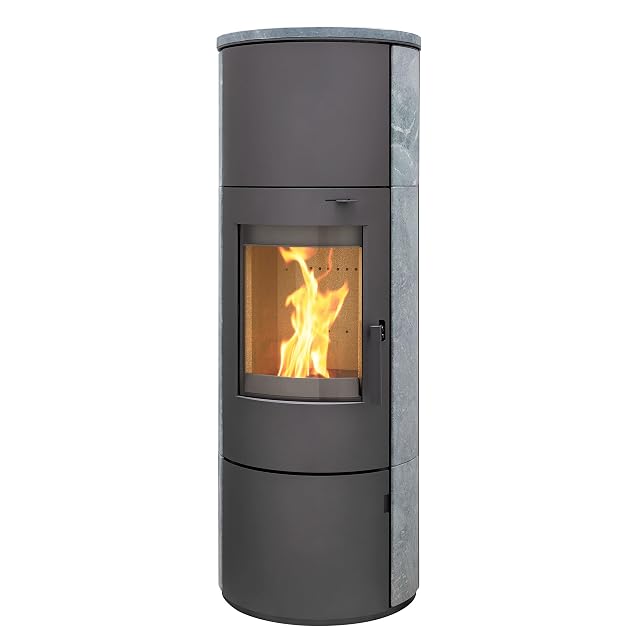
A chimney that already serves a boiler or an older stove is not automatically available for a second appliance, and the sentence that settles it is rarely on the listing. What matters is the appliance type: a firebox whose door closes itself cannot be left open to draw air from the shared flue, and that is the condition under which several countries allow more than one appliance on the same chimney. Manufacturers describe this as type 1 rather than type 2, and the three pages below are the only ones in this catalogue where the claim is made in the listing itself. It is not a substitute for the sweep’s approval — that is a local decision about a particular chimney, its cross-section and its height — but it is the difference between an appliance that might be permitted and one that certainly is not.
By Jean-Benoit Buisson
The door is the mechanism
A shared flue works because every appliance on it stays closed to the room while the others draw. A self-closing door is what guarantees that when somebody walks away mid-load, and it is the reason the distinction between type 1 and type 2 exists at all.
An appliance whose door stays open where it is put is not a worse appliance. It is one that has to have the chimney to itself.
What the listing can and cannot settle
A maker can state that the appliance is built for multiple connection. It cannot state that your chimney will take it, because that depends on the section, the height, the draught and what is already connected.
The three pages here are the only ones in this catalogue where the first half of that is written in the listing rather than left to be assumed. The second half belongs to whoever signs off the installation where you live.
Pellet appliances are a separate question
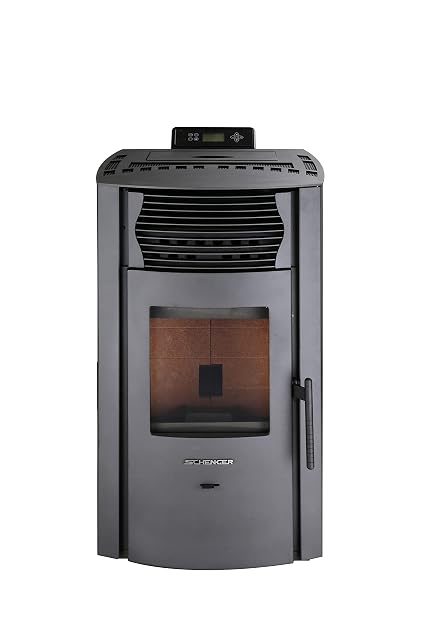
Most pellet stoves are fan-driven, which puts the flue under positive pressure rather than letting the chimney pull. A system built for natural draught is not sealed for that, and a shared flue carrying both regimes is a question for a specialist rather than for a listing.
One pellet appliance in this catalogue states multiple connection. That statement and the pressure question are two different things, and both have to be answered.
Questions this guide leaves you with
What is the difference between type 1 and type 2?
A type 1 appliance has a self-closing firebox door; a type 2 door stays where it is put. The distinction exists precisely because a shared flue must not be opened to the room by one appliance while another is drawing on it. Where a listing states type 1 and multiple connection, the page prints it; where it states type 2, the page prints that too.
Does an approval on the listing mean I can connect it?
No. It means the appliance is built for it. Whether a particular chimney can carry two appliances is a calculation about that chimney — its section, its height, the draught it produces — and in most places it is signed off by the sweep or the inspector. The listing statement is a necessary condition, not the decision.
Can a pellet appliance share a flue?
One listing in this catalogue states that it is suitable for multiple connection, and it is on this page. It is worth reading carefully: pellet appliances are usually fan-driven, which puts the flue under positive pressure, and a system built for natural draught is not sealed for that. The two questions are separate and both have to be answered.